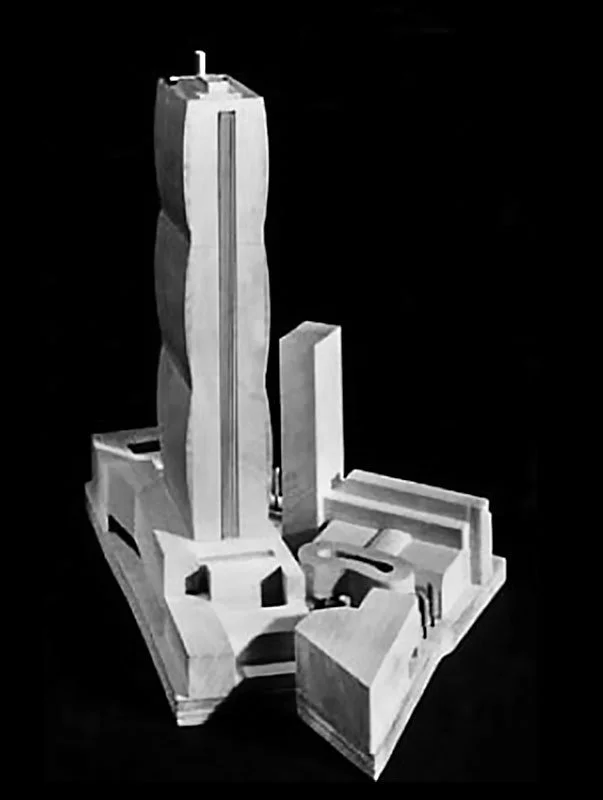
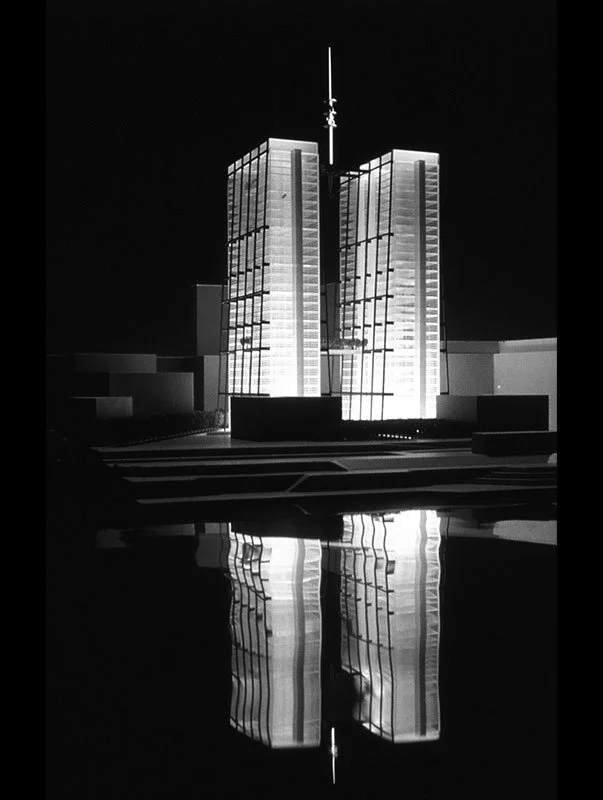
Over more than 30 years, Steffen Lehmann has designed and built numerous award-winning projects — large and small — at sites of historical and cultural significance.
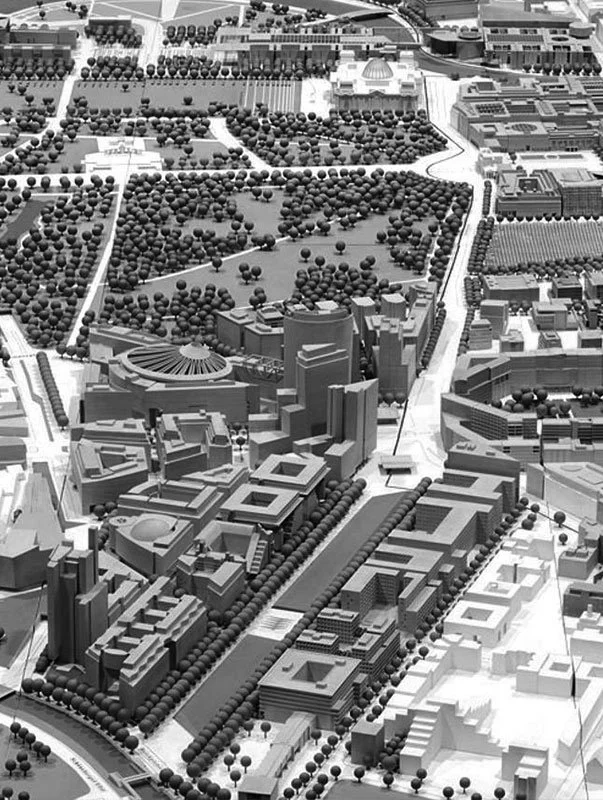
His early commissions were concentrated in Berlin, where he played a central role in rebuilding the city centre throughout the 1990s. Working within Renzo Piano's masterplan framework, he was one of the lead architects at both Potsdamer Platz and Hackescher Markt — two of the most consequential urban reconstruction projects in post-war European history.
Potsdamer Platz (1991–2002) — Lehmann oversaw the design and construction of several large-scale office buildings, most notably the headquarters for Berliner Volksbank (now the Pfizer Pharmaceuticals headquarters), with a project budget of $400 million. The 40,000 sqm development incorporated energy-efficient facades, green roofs, and integrated urban green spaces, revitalising a historically significant site while minimising environmental impact.
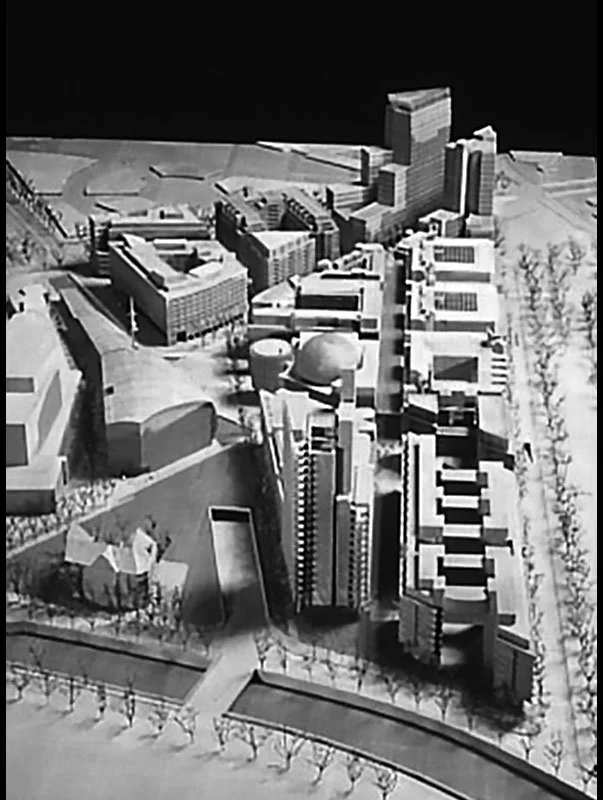
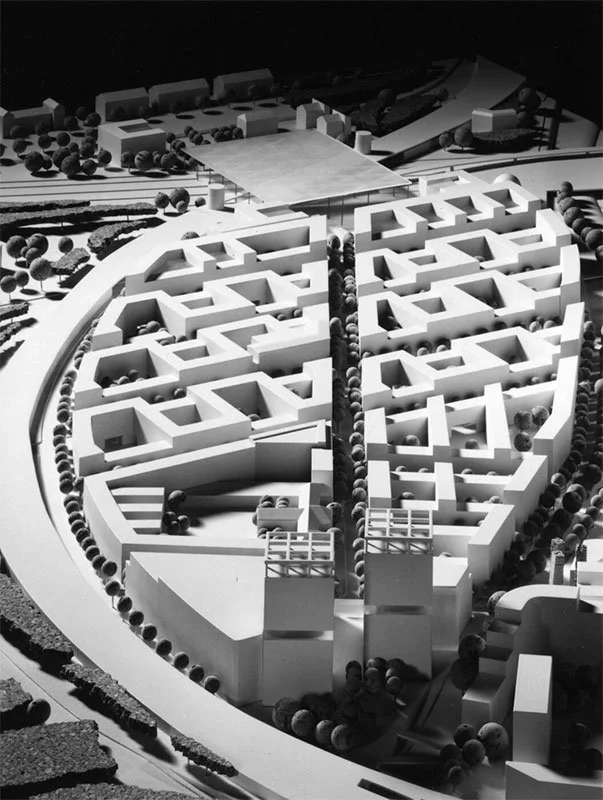
Hackescher Markt: Quartier an der Museumsinsel and Monbijou Park (1994–2002) — A $400 million development for the head-quarters for the Bund Deutscher Banken. The project prioritised site-sensitive urban integration, structural reuse, and low-carbon operations, responding carefully to the character of the surrounding historic fabric.
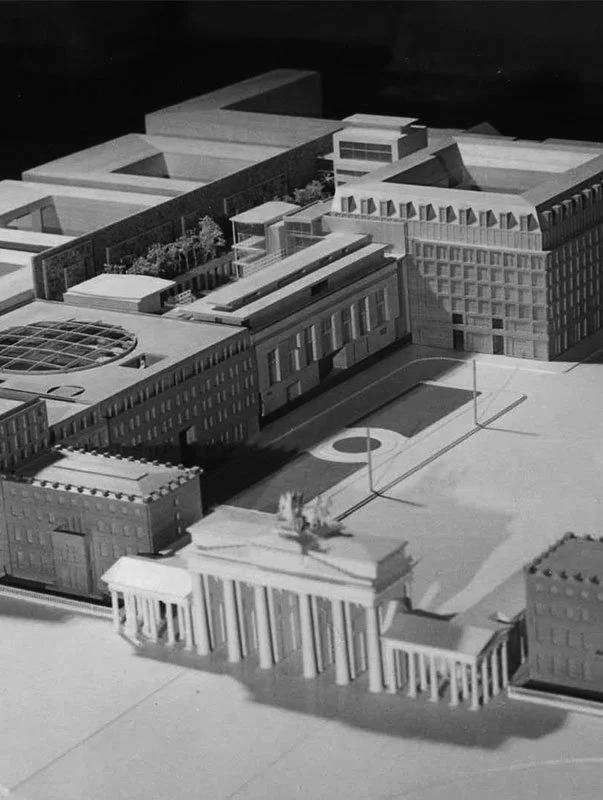
French Embassy and Residence, Pariser Platz (1997–2002) — As Generalplaner for this $150 million project, developed in collaboration with Pritzker laureate Christian de Portzamparc, Lehmann integrated green building strategies including rainwater harvesting and high-performance insulation to meet stringent environmental and planning standards.

Built Work: Key Projects
German Workers' Union Headquarters, Quartier an der Museumsinsel (1995–2002) — A $150 million mixed-use development won through international competition, featuring energy-efficient systems and careful contextual integration with the historic Museum Island precinct.
Auswärtiges Amt Extension, Oberwasserstrasse (1997–2003) — A $50 million commission for the German Ministry of Foreign Affairs, incorporating low-impact materials and adaptive reuse design principles.
Masterplan for Albertplatz, Dresden (1994–2000) — A $100 million urban revitalisation initiative for Dresden's historic Old Town, centred on sustainable planning, integration in a heritage-protected context and green infrastructure.
SOLARIS Residential Series (2017–2027) — A collection of high-end coastal residential projects designed to reconnect residents with tropical nature, wellbeing, and a relaxed coastal lifestyle (in Costa Rica, Bali, and Australia).
Following his move to Australia in 2003, Lehmann extended his practice to commissions in Sydney and Brisbane — adapting European design and modular techniques to Australian climatic conditions through passive solar design and compact urban dwellings.

CITIES ARE THE LARGEST AND MOST COMPLEX SYSTEMS HUMANS HAVE EVER CREATED.