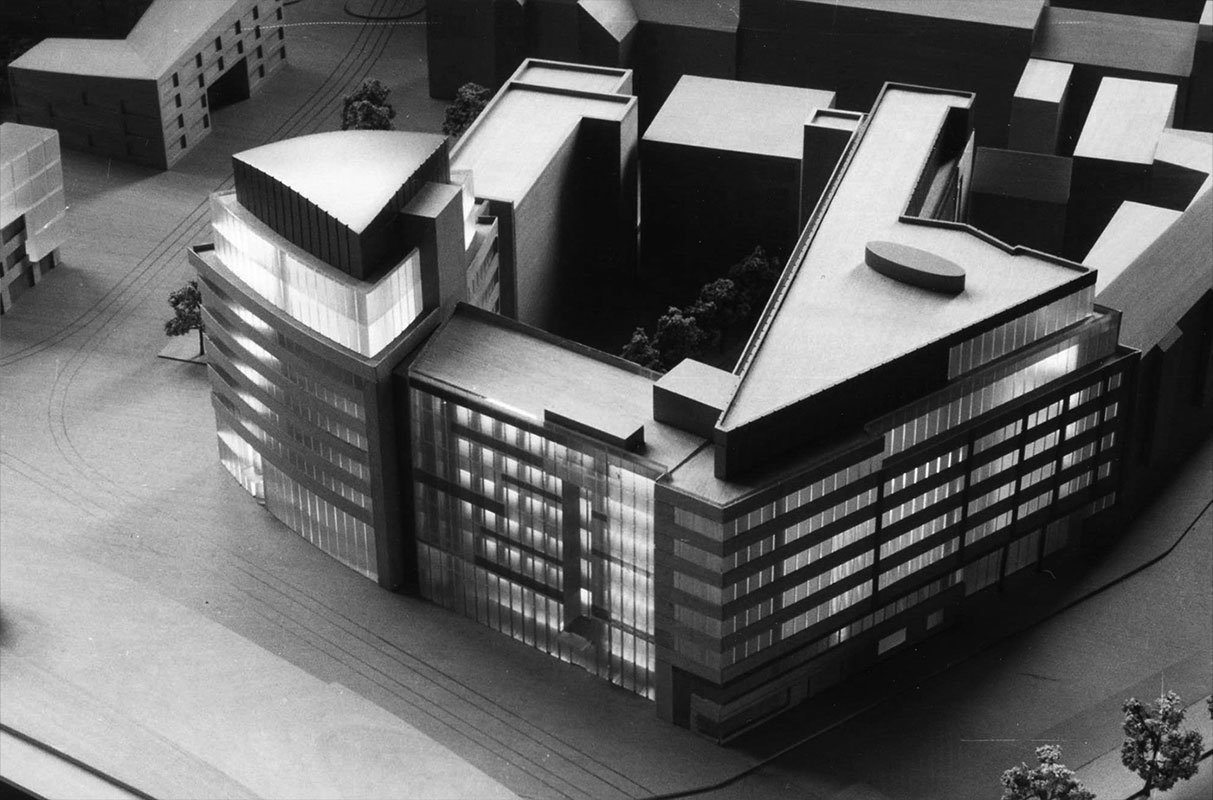
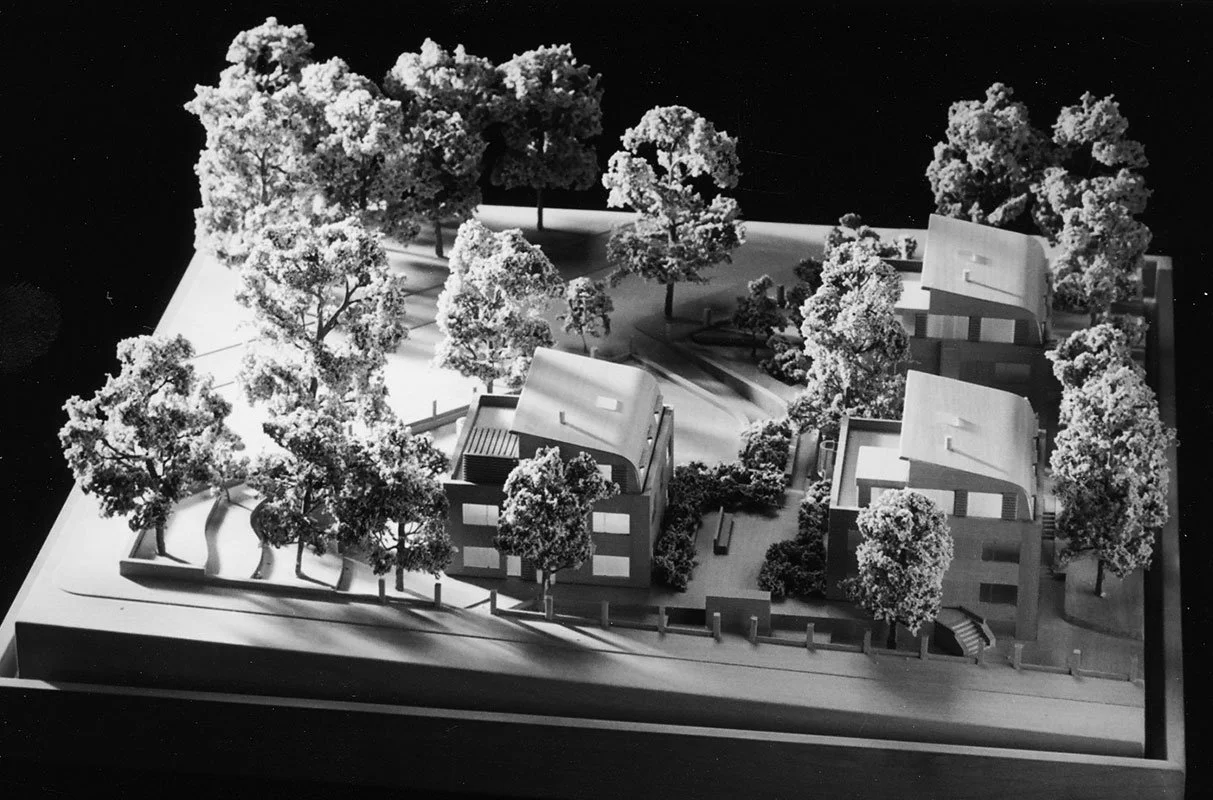
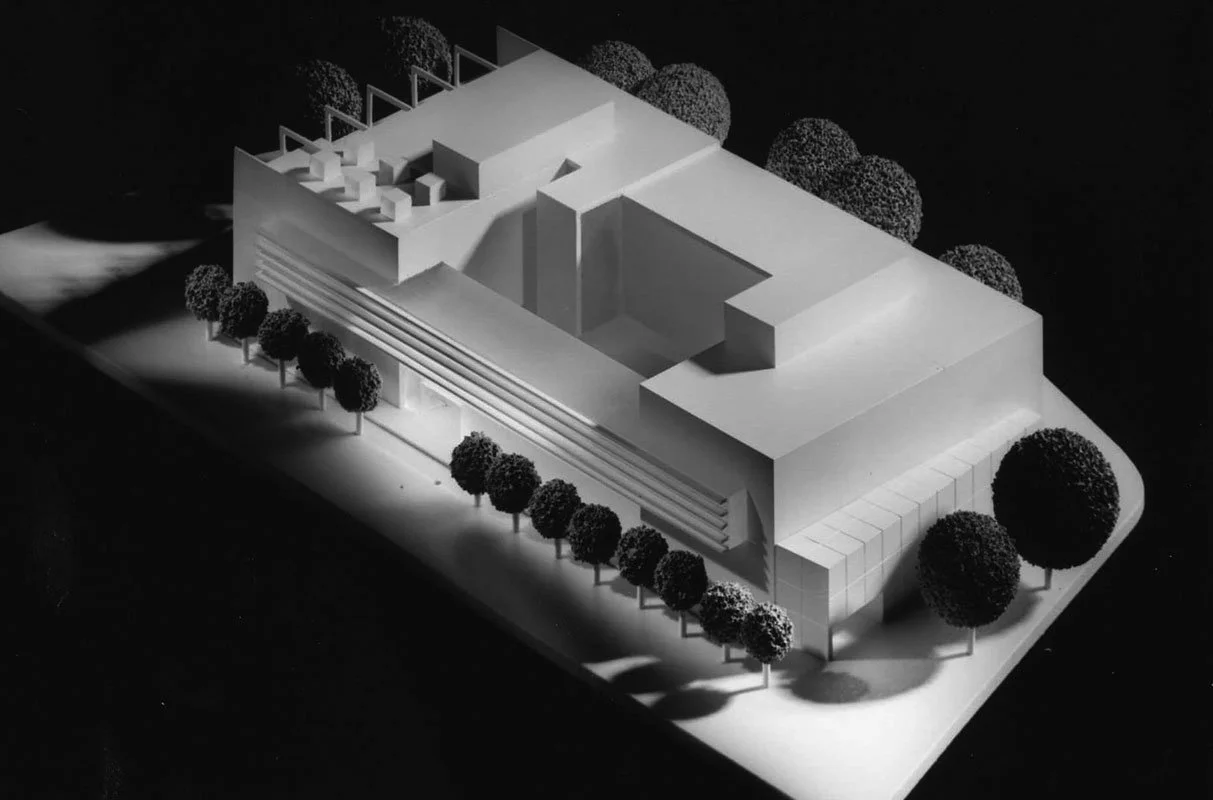
The Creation of Novel Urban Paradigms
Lehmann's intellectual contribution traces a clear lineage: from Green Urbanism in the 1990s, to the Zero Waste City concept introduced in 2013, to three original urbanisation frameworks developed through large-scale design research — Density without High-rise, The City of Short Distances, and Multi-Layer Mobility City.
These field-defining ideas have reached a global audience of researchers, practitioners, and policymakers through an extensive publication record. More than 1,500 researchers have cited his research on Green Urbanism (Lehmann, 1998); the Zero Waste Index (Zaman & Lehmann, 2013) has appeared in over 1,300 publications. From 2006 to 2014, he served as Editor-in-Chief of the Journal of Green Building (US journal) — a platform through which he helped shape international discourse on sustainable design.
Core research themes include:
Architecture and urbanism,
Urban resilience,
Climate adaptation,
High-performance design, and
Integration of circular economy principles into urban systems.
Throughout a distinguished career spanning architecture, urban design and education, Steffen Lehmann has dedicated himself to generating new knowledge and creating positive social impact — principally through improving cities' public spaces and resource efficiency. He is the founding director of the Urban Futures Lab, an interdisciplinary think tank at the University of Nevada, focused on sustainable urban futures.
His research record is substantial: 24 books with leading international publishers, more than 500 articles, papers, and book chapters, significant external research income through grants, consultancy, and industry partnerships, and a citation record that places him among the most referenced scholars in his field.

Research & Innovation

I HAVE ALWAYS BEEN INTERESTED IN THE THEORY BEHIND THE PLANS. WHAT IS THE NEW URBAN IDEA — THE CONCEPTUAL POSITION?
Between 2021 and 2023 alone, Lehmann published four new books and edited two special journal issues:
Urban Informality, Di Raimo A., Lehmann S., Malis A. (eds), Routledge, 2021
Trans-Atlantic Engagements, Lehmann S. (authored), ORO Editions, 2021
Resilient Communities, Lehmann S. and Malis A. (eds), D-Editore Venice Biennale of Architecture, 2022
Reimagining the Library of the Future, Lehmann S. (authored), ORO Editions, 2022
Journal of Sustainability, Special Issue (co-edited with Prof. Mike Jenks, UK): 'Pathways to Sustainable Urban Form: Compact Cities Re-Imagined'
Journal of Buildings, Special Issue (co-edited with Dr. Monika Szopinska-Mularz): 'Novel Trends in Urban Design for Building Resilience'
Lehmann's Google Scholar profile records over 7,500 citations, an h-index of 40, and an i10-index of 73 (as of May 2026) — placing him among the most cited scholars in sustainable urbanism globally. Several of his publications have been translated into Chinese, German, French, Italian, Spanish, Korean, and Japanese, reflecting the international reach of his ideas.
His forthcoming book, Designing for the Desert: Building and Living in an Extreme Climate, extends his research into one of the most pressing environments of the 21st century.
25 of his publications have each been cited over 100 times by researchers around the world.
Global Impact
Steffen Lehmann is an authoritative source on sustainable urbanism.
He has authored or edited 24 books on sustainable architecture, urban design, and environmental resilience, published by Earthscan, Routledge, Springer, Palgrave Macmillan, Actar, and ORO Editions, among others.
His seminal work, The Principles of Green Urbanism: Transforming the City for Sustainability (Earthscan for Routledge, 2010), sets out a holistic methodology for sustainable urban development — drawing on global case studies to advocate for integrated green strategies in post-industrial and rapidly urbanising contexts. With over 500 registered citations, it has become an influential reference in sustainable city planning and urban design education worldwide, establishing core principles of resource efficiency and urban regeneration.
Low Carbon Cities: Transforming Urban Systems (Routledge, 2015) examines strategies for retrofitting existing urban infrastructure to achieve low-carbon goals, addressing energy-efficient systems and resilient urban form. It has since become a key reference for both practitioners and scholars working in sustainable urbanism.
n 2010, Lehmann founded the Zero Waste Research Centre for Sustainable Design & Behaviour — a world-first research institution dedicated to this topic, backed by $5 million from the South Australian Government. Its research agenda spanned construction waste avoidance, modular off-site manufacturing, and design for disassembly, establishing a body of work that anticipated the field by over a decade.
The Centre pioneered work on adaptive reuse, construction waste reduction, material efficiency, mass timber, and the integration of circular economy principles into urban planning and architecture — years before these ideas entered mainstream discourse.
For two consecutive years (2024–2025), Professor Steffen Lehmann has ranked among the world's top researchers in Sustainable Architecture and Urban Regeneration — placing 10th globally in Urban Renewal and 18th in Green Building, out of 54,200 scholars in Architecture.
The ranking is produced by ScholarGPS, the world's most comprehensive scholarly analytics platform, tracking over 30 million researchers across 120,000 institutions worldwide. Being named to this list two years running signals sustained impact, not a one-time result.
His research and built work have earned consistent third-party recognition — cited in academic literature, covered by international press, featured in industry publications, and discussed across podcasts and blogs worldwide. Recent coverage spans BBC News (London, interview in Nov. 2024) and the cover story in Economy Chosun (Seoul, Korea, March 2026), reflecting growing demand for his perspective on sustainable urbanism.